
The existing world food crisis is deepening while dangers of famine in the short-term are escalating due to fractures in agricultural supply chains caused by conflict in West Asia.
However, these short-term crises are superimposed on a far graver, deeper and longer-running risk of a collapse in global food production due to the remorseless combination of climate change and losses of soil, water and biodiversity.
“Acute food insecurity and malnutrition levels remain alarmingly high and deeply entrenched, with crises increasingly concentrated in a core group of countries,” says the Global Report on Food Crises (GRFC) 2026. Over 266 million people in 47 countries are facing acute food scarcity, a number which has doubled in ten years. Overall, 690 million people are malnourished.
Meanwhile the Gulf War is menacing farm production even in countries that deem themselves food secure, by choking off up to >30 per cent of world fertiliser supplies and boosting prices beyond many farmers’ ability to pay. The US, for example, depends on imports from the Gulf for >25% of its fertiliser needs - and is thus shooting itself in the bread-basket by combining with Iran to blockade them.
The impact of the fertiliser choke-off is already affecting crop plantings across the northern hemisphere, heralding sharp rises in global consumer food prices before the end of 2026. The FAO food price index has already started to climb in anticipation.
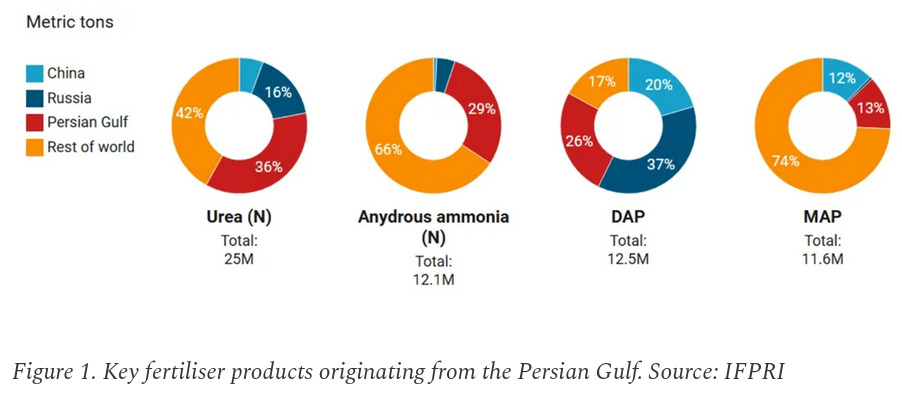
However, these are but surface phenomena in the picture of growing global food insecurity due to human overpopulation, overconsumption and their catastrophic impacts on soil, water, climate and biodiversity.
Soils
A silent disaster is unfolding in the world’s food producing soils: erosion, loss of organic carbon, nutrient depletion, salinization, acidification, chemical pollution, loss of soil biodiversity, soil sealing and urban sprawl. To these have been lately added two more: the damage caused by wars and the destruction of large areas of productive soils by mining and energy extraction.
The soil supplies 94% of humanity’s food needs, and its dramatic decline foreshadows the approaching end of our ability to maintain an agriculture-based food supply within the present century. A recent study noted around half of the Earth’s topsoils are degraded, and this will rise to 95% by 2050.
Farming cannot exist without topsoil to sustain it, and the global estimated soil loss in 2015 was around 28-38 billion tonnes a year to water, tillage, wind erosion (often due to overgrazing). However, these numbers are over a decade old, while the impacts of climate, land clearing and deforestation have all surged. Also, they take no account of the global decline in soil fertility, health and structure.
Few consumers and almost no governments are aware of the catastrophic rate at which modern industrial farming is devouring its topsoil. Many farmers are aware – but are trapped by economics into furthering the destruction. Tragically, industrial farming has now become a form of mining that continues until the resource is exhausted.
Water
Farming currently uses 72% of the world’s available freshwater - but colossal competing demand from burgeoning megacities, IT and AI, the energy and mining sectors, along with the collapse of river systems, groundwater and glaciers means that there will be less and less water available to grow our food and supply our cities. At the same time climate change is creating fiercer droughts and floods that devastate farm crops and land.
To feed humanity by the mid-century, the World Bank estimates will require an extra 70% more water. This means it will take 20% more fresh water than the Earth can supply, resulting in a colossal food shortfall.
As these water shortages intensify they will have four main effects: reduced crop production, food scarcity, soaring consumer prices, mass migration and escalating conflict over dwindling food, land and water.
Environment
Agricultural biodiversity – the rich variety of crops, livestock breeds, soil organisms, insects and wild plant relatives that underpin our food systems – is vanishing faster than most people realize warns the Environmental Studies Institute. This directly threatens the ecosystem services – such as pollination, natural pest control, soil health and fertility – that farming depends on to function.
The elements causing the destruction are principally land clearing and the indiscriminate use of 5 million tonnes of agricultural pesticides a year. These pesticides are increasingly deadly – up to 10,000 times more toxic than DDT, for example – killing honeybees and many insects that sustain birds, fish, frogs and other wildlife which in turn control farm pests.
Modern farming systems are thus steadily eliminating the natural resources which make farming possible.
Climate
The world food supply is critically vulnerable to climate impacts – and becoming more so with each passing year. As global temperatures rise, the world will start to witness large-scale regional harvest failures due to drought, floods, storms and heat, building steadily towards major famines in the second half of the 21st century.
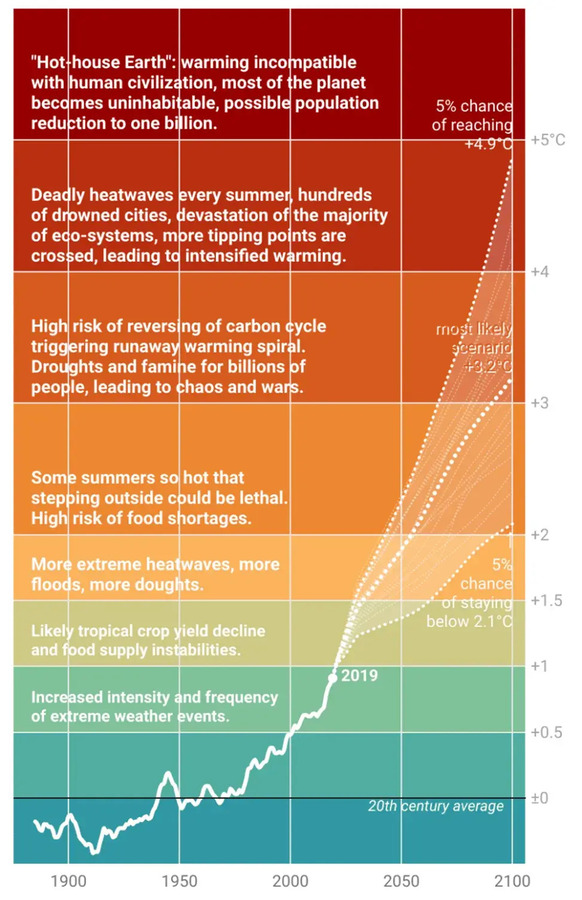
Figure 2. Impact of rising degrees of global warming. Source: Roger Hallam. Chart by Gregor Aisch.
To its own detriment, agriculture and food production generate up to 30% of the world’s total climate emissions. This means that every time a farmer starts a tractor today, he is cutting into a future farmer’s harvest, due to the prolonged climate impacts. Through fossil fuels, agriculture has evolved into an engine of self-destruction.
World food collapse
Where all this is leading is a collapse of the world food system, universal famine and the deaths of several billion children, women and men. Food prices may well reach the point where they bring down the entire world economy.
The latest – of many – expert views on this unsavoury issue comes from the UK Institute of Actuaries, whose latest report states baldly that humans are making the planet insolvent.
“We are currently managing our global natural assets with a level of negligence that would be unthinkable in any other sector of the economy. We are treating a finite, interconnected ledger of biological wealth as an infinite extraction fund, and the maths simply no longer adds up,” they say. “We are pushing multiple Earth system processes beyond safe operating limits, moving toward tipping points where the damage becomes irreversible on any human timescale.”
The report details a wide range of both chronic and acute risks to the global food system, with severe ramifications for society, the economy and world peace. These occur in the short term and compound in the longer term. Furthermore, it notes widespread failure by policymakers to respond to most of them.
Actuaries are not a profession prone to exaggeration or hyperventilation. If they say “We got a problem”, then we got a problem.
Unfortunately, owing to generous food surpluses in most countries created by agricultural mining of the planet and the destruction of its food system resources, most consumers and governments remain oblivious of the scale of the danger and are doing little or nothing to avoid it. This adds to the likelihood of future famines and mass death.
Is there a solution? Certainly. It’s called renewable food. But right now, very few people or companies and almost no governments are taking it seriously.
We will reap the harvest we sow.
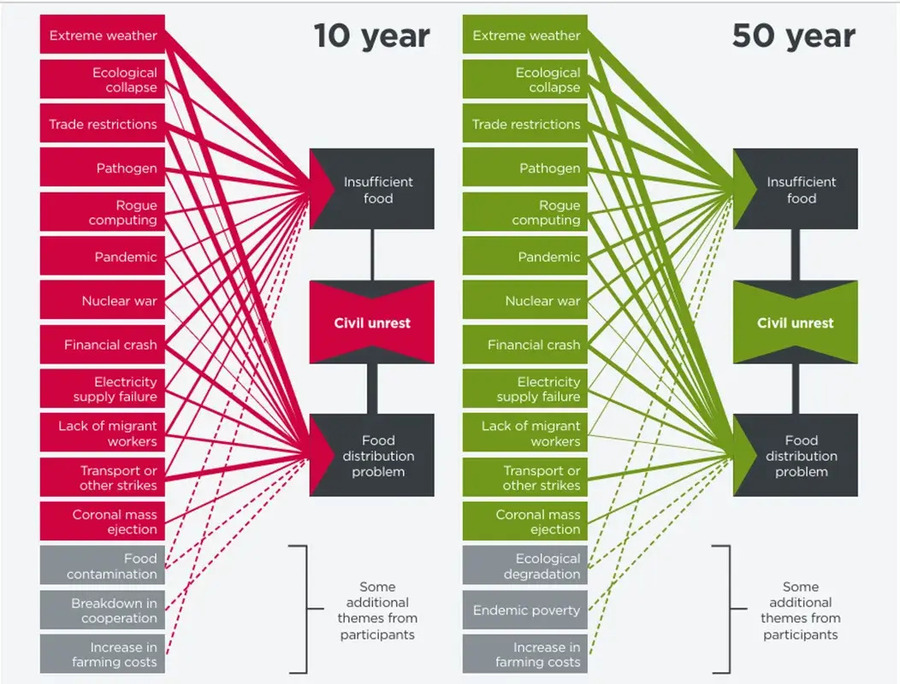
Figure 3. Food risks in the short and medium term. Source: Institute of Actuaries
Author
Julian Cribb is an award-winning journalist and science writer, author of numerous books like The Coming Famine, In the Living Forest, Fishes of a Dream, Surviving the 21st Century, Open Science, Dry Times, Poisoned Planet (all here), How to Fix a Broken Planet, Food or War, Earth Detox (here).
He notes: The Coming Famine was also the title of a book I wrote back in 2008 (University of California Press), foreshadowing the dangers of an unsustainable food system. Many of its predictions are now coming true. I discussed the solutions in a subsequent book Food or War (Cambridge 2019)
Julian's writes at Surviving the 21st Century at Substack
NB: For benefit of our readers and the General Good, TLA endeavors to link authors' books to small reseller Better World Books which is a partner of Internet Archive (WayBack Machine) as well as to known local bookshops in various states, like BookShop Santa Cruz (NorCA), Tattered Cover (Denver), The Last Bookstore (Sou CA) and Powells Books (OR), rather than to corporate sites. Fast disappearing this century, these cozy community lairs need our support. If you know a favorite nook stuffed with books, often with small coffee bar and even a cat, send us the link and we'll include them when we link books. ~Ed.