There's a very positive energy rising. Have you felt it?
Counterpoised with degenerating imperialism, this reincarnated countercultural spirit melds the peace, love and equality of the ‘60s with the systems thinking and team-building of the ‘90s in a ripened alternative to some five centuries of domination.
Those of us old enough to remember the youthful spirit of the '60s, when it literally sang out and sat in against war, for peace and civil rights, freedom, equality, cooperation, human rights and the environment, will observe the lineage of this force, now matured, self-reliant, independent, grounded. We can also trace a thread through the ‘90s’ team-building, employee- and customer-centering, continuous improvement, consensus decision-making, human rights, animal rights, environmental impact learning organizations, and "systems thinking" practices then permeating business and organizational leadership.
Whether you can connect it with its antecedents or whether it feels completely new, there is an irresistible force, self-reliant independent, grounded. A force to be reckoned with.
Western Goals
During the ‘80s, Western leaders and billionaires had put an end to all this peace-and-love stuff, only for it to resurface in the '90s.Then, in 2001 delivered what was intended as a fatal blow, ushering in a quarter century of splintered, angry, me-show, greed-is-good, 24/7-surveilled-monitored-manipulated-misled cultural decrement, global subjugation, bloody onslaughts and murder or incarceration of popular leaders.
"America should seek to preserve and extend its position of global leadership by maintaining the preeminence of U.S. military forces."~ PNAC, p. iv
"[T]he 21st century world is - for the moment, at least - decided unipolar, with America as the world's 'sole superpower.'" ~ PNAC, p.2
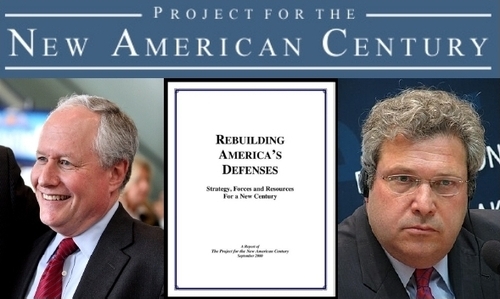
Bill Kristol by Gage Skidmore CC-BY-SA 3.0 / Public Domain /Robert Kagan Fot Mariusz Kubik 03 CC-BY 3.0
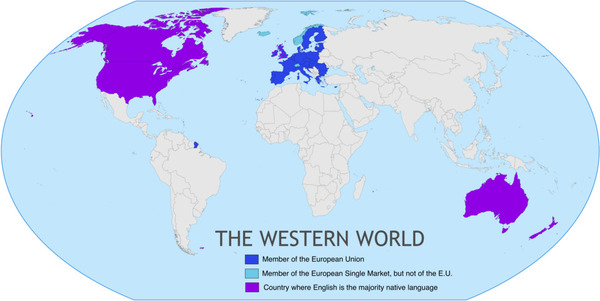
Map of the Western world consisting of the anglosphere (as defined by James Bennett), the European Union and European Single Market members, 2017, CC-BY-SA 4.0
Meanwhile, in the East...
"I consider that the unipolar model is not only unacceptable but also impossible in today's world. The model itself is flawed because at its basis there is and can be no moral foundation for modern civilization. There is no reason to doubt that the economic potential of the new centers of global economic growth will inevitably be converted into political influence and will strengthen mulipolarity." ~ Vladimir Putin, 10 February, 2007, Munich Security Conference
Two sister civilization states share a 2600 mile border (4200 km) and a strategic partnership that's inspiring the world to “changes "not seen in 100 years".
We could call it foreshadowing when during the 60s, the Beatles traveled to Bangor, Wales and Rishikesh, India in ‘67 and ‘68 to attend Transcendental Meditation (TM) seminars, producing Magical Mystery Tour and the White Album with tracks heavily influenced by their immersion in Eastern cultures, and resulting in the West in a huge TM movement, particularly among young Americans. Then again in the 90s, when Buddhism, even TM, experienced another surge in the West.
In the 2020s, the locus of the aforementioned force to be reckoned with has emerged powerfully in two nations: the world’s largest country by area and the world’s second-largest by population. China and Russia both lead nations focused on people over profits. Both have worked to lower their nation’s debt while increasing reserves, thus strengthening national sovereignty. Both have developed their nation’s self-reliance and self-sufficiency through programs like Russia’s “import substitutions”, and sustainability projects like China’s “PV sheep” so they can anticipate, mitigate and respond quickly to natural disasters as climate chaos increases as well as withstand sanctions and proxy attacks from Western "partners" or "colleagues" (in due course, predecessors) and grow stronger. Resilience has come through equity, cooperation, continuous development/improvement, human rights and environmental impact.
Building BRICS
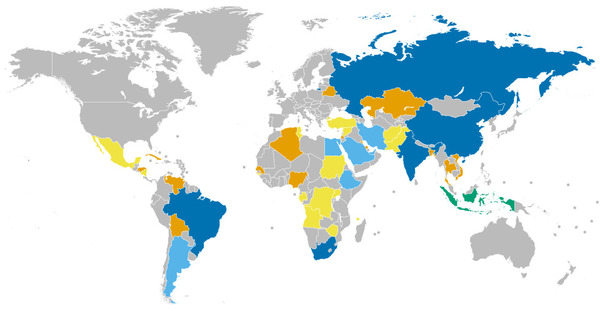
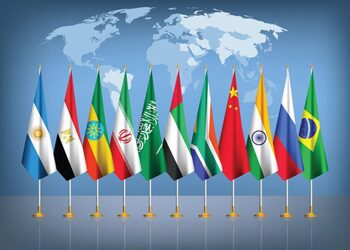
BRICS members and countries joining, applied, want to join - Dmitry_Averin Дмитрий-5-Аверин, 2024-CC-BY-SA-3.0_Intl.Unported
A majority of the planet's peoples have been gravitating toward the “Win-Win” strength of working together to build their own self-reliance and resilience. And, more are After five centuries of colonialism and neo-colonialism (debt-based bondage), the "Global Majority" - 85%-90% of the world's people who have had little voice in world affairs – are moving from the World Bank, Bank of International Settlements, International Monetary Fund, International Criminal Court, International Court of Justice, and Petro-Dollar system to alternatives they themselves are helping to create, such as BRICS members have established the New Development Bank, the BRICS Unit, and BRICS Pay, among their programs “Striving for the Building of a Community With a Shared Future for Humanity.”

The United Nations' Charter proposes "Peace, Dignity and Equality on a Healthy Planet" as well as the Earth's own charter. But, the UN cannot deliver while under control of the ever-colonialist West. What seemingly began as Western partnerships with "developing" countries revealed itself as relabeled colonialism, Divide et impera, "profit before people", domination rather than cooperation.

The Global Majority are raising their voices in support of each other and the Earth through BRICS programs and to restore the UN to its original charter and its original purposes.
Germany has failed to win a temporary seat on the UN Security Council for the first time in modern history, losing a General Assembly vote to Austria and Portugal. Foreign Minister Johann Wadephul called the outcome “a real disappointment” and blamed Russia for the loss....Portugal won 134 votes and Austria 131 in the contest for two seats allocated to the Western Europe and Others group, while Germany received only 104 votes in a secret ballot on Wednesday. Zimbabwe and Trinidad and Tobago were elected unopposed to seats reserved for Africa and Latin America and the Caribbean, respectively. Kyrgyzstan secured the Asia-Pacific seat after defeating the Philippines. The five incoming elected members will replace Pakistan, Somalia, Greece, Denmark, and Panama for a two-year term beginning on January 1, 2027. ~ RT
On May 26, 2026, Wang Yi, Chinese Foreign Minister, addressed the United Nations Security Council High-Level Meeting: "Upholding the Purposes and Principles of the UN Charter and Strengthening the UN-Centered International System":
🚨BREAKING: "China has made it absolutely clear
— Daily Iran News (@DailyIranNews) May 30, 2026
"We need a new UN Secretary-General who is not America's puppet, but a true guardian of the United Nations, ending the era of America's unilateral dominance.
China's message:
We demand justice, sovereignty, and a real United… pic.twitter.com/n9I5w5BISZ
First, we need to reinvigorate the U.N. Charter for stronger leadership. Second, we need to reinvigorate the authority of the Security Council for greater ability to act. ~ Wang Yi
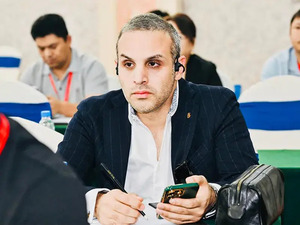 Nasir Kazeroun of the BRICS Federation stated:
"[B]uilding consensus on the rules of a new, multipolar game [BRICS]t solidified [its] role as the principal architect of an alternative world order centered on the Global South." BRICS provides a forum for countries formerly under-represented in global institutions and decision-making, their voices often ignored at the UN. For those unfamiliar with the role and achievements of the Global South through BRICS, these links provide further information, along with the New Development Bank and BRICS Pay. Alternatives in trade, payment systems, development projects, loans and developing self-reliance (import substitutions) to de-fang sanctions give countries more breathing room, a forum for new ideas, and a stronger voice.
Russia has also backed expanding the Security Council to include more African, Asian, and Latin American states. Moscow’s deputy envoy to the UN, Dmitry Polyansky, told an African Union Committee of Ten summit in New York in September that the council should reflect the “multipolar nature of the world” rather than “the global colonial past.” Polyansky said Russia supports Africa’s push for greater representation, while warning against increasing Western representation on the council. Africa can no longer be sidelined at UN Security Council – AU chief
"Building for Resilience, Innovation, Cooperation and Sustainability"
 May 27, 2026 The Network of Partner Cities in New Industrial Revolution was officially launched at the BRICS New Industrial Revolution Partnership Forum held in Xiamen, east China's Fujian Province.
The network was jointly initiated by 11 cities, including Durban in South Africa, Lagos in Nigeria, Belgrade in Serbia, Almaty and Astana in Kazakhstan, Kaposvar in Hungary, and the Chinese cities of Xiamen, Nanjing, Wuhan, Yinchuan and Chengdu.
The network's focus is on green and low-carbon development, digital transformation, industrial chain collaboration, and talent cultivation. It aims to create a new platform for international inter-city cooperation through regular communication mechanisms, industrial matchmaking and the sharing of innovation resources.
New payment systems, which bypass the dollar and those other financial institutions like the IMF, World Bank and Bank of International Settlements while those are all being weaponized as control mechanisms, are in play:
mBridge, or BRICS Bridge:
Essentially, mBridge is a multi-Central Bank digital currency (CBDC) platform shared among Central Banks and commercial banks, and enabling instant cross-border payments and settlement. https://thecradle.co/articles-id/25443 BRICS Foreign Ministers emphasized developing a fast, low-cost, neutral cross-border payment system to support greater trade and investment flows. The Brics Bridge concept crystallized in 2023 following Russia's debarment from Swift and accelerated after the 2024 BRICS expansion.
The 2024 Kazan Declaration noted BRICS accounts for over 40% of global GDP and envisaged a blockchain-based financial messaging system. Existing national systems including China's CIPS, Russia's SPFS, and India's UPI are identified as building blocks for the new architecture.
The proposed system aims to enable real-time transfers and direct settlement in local currencies to reduce costs and exchange-rate risks. Compliance with international standards on anti-money laundering and fighting the financing of terror is a stated requirement. The upcoming BRICS summit in India is expected to indicate future directions for the payment initiative.
Development Financing in an Era of Technological Revolution
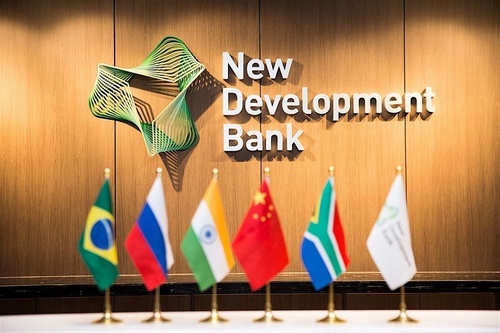
Headquartered in Shanghai, the NDB was established in 2014 by Brazil, Russia, India, China, and South Africa, and officially began operations in 2015. Its mission is to mobilize resources for infrastructure and sustainable development projects in BRICS member nations and other emerging-market economies and developing countries.
Our strong mandate and potential put us in a unique position to contribute to global growth and development. The New Development Bank (NDB) approved a loan of up to $1 billion for South Africa. Funds will upgrade urban infrastructure across eight metropolitan municipalities. Investments target essential services including water supply, sanitation, electricity, and solid waste management. Beneficiary municipalities include Johannesburg, Cape Town, Buffalo City, Ekurhuleni, eThekwini, Mangaung, Nelson Mandela Bay, and Tshwane.
BRICS Pay

Your Financial Freedom Without Borders
BRICS Pay is for your freedom to pay whenever, wherever, however — with the money and methods that feel natural to you, not imposed on you. Use the cards and accounts you already have to pay in any BRICS+ country, from everyday C2B purchases on your trips to strategic B2B settlements between companies, in any currencies.
The platform aims to enable instant cross-border transactions directly in national currencies, offering an alternative to dollar-dependent systems like SWIFT. In the short term, the system is expected to coexist with SWIFT rather than replace it, particularly benefiting small and medium enterprises.
BRICS Universities League
BRICS UL shall act as a platform for bilateral and multilateral exchanges between universities in BRICS countries, as an important mechanism for promoting education cooperation and cultural exchanges between BRICS countries, and also as an international think tank supporting policy research in BRICS countries. From January 2019, Fudan University shall serve as the BRICS UL Secretariat to further promote the work of the BRICS UL. The specific work is undertaken by the Center for BRICS Studies, FDDI.
BRICS Network University
BRICS-NU is a collaborative initiative that brings together leading higher education institutions from Brazil, Russia, India, China, and South Africa. As a network focused on academic and research cooperation, it promotes joint programs, mobility, and interdisciplinary knowledge exchange among BRICS nations.
With its Executive Secretariat jointly coordinated by UNESP (Brazil) and the Harbin Institute of Technology (China), BRICS-NU supports a multilateral academic platform that fosters inclusive, innovative, and sustainable development.
A Time of Historic Change
The West will continue to fight, at least for now, because it doesn't know what else to do. The transition will take time, enormous effort, patience, and the enduring of more attacks. And, many ordinary humans do not like change and will fight both change and those who bring it.
But, inexorably, the times are "a-changin'" once again. BRICS and the Global Majority are building a new world.
Copyright © 1963, 1964 by Warner Bros. Inc.; renewed 1991, 1992 by Special Rider Music